


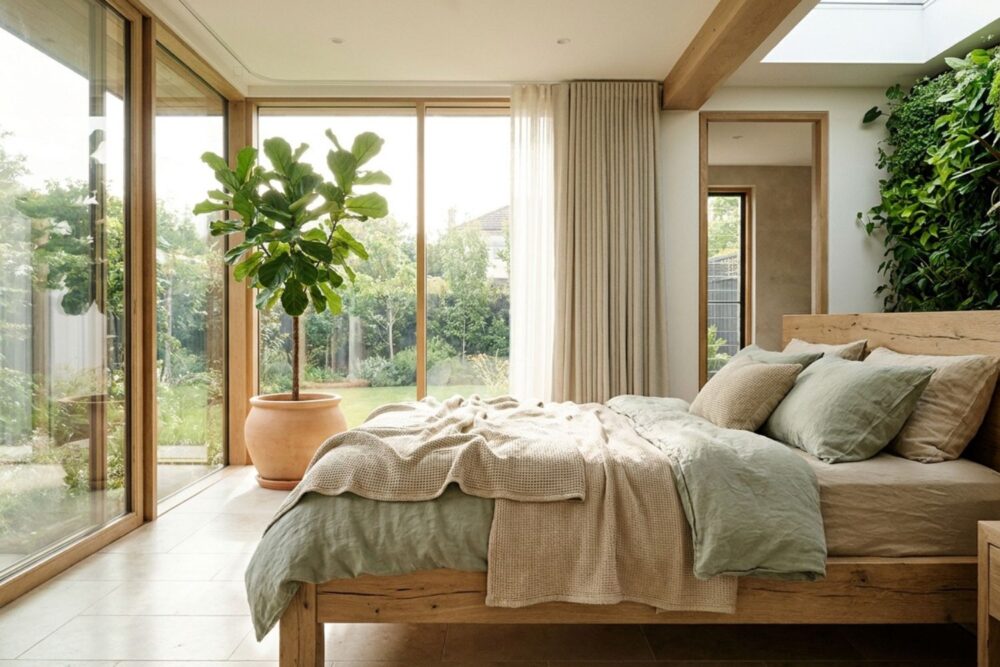
AD | Collaborative post
Your bedroom should be your personal sanctuary—a dedicated space where you can truly switch off, recharge, and wake up feeling your absolute best. While many of us focus on lighting or layout, one of the most powerful, evidence-backed tools at your disposal is nature itself.
Bringing elements of the natural world indoors—known as biophilic design—is far more than a passing visual trend. Exposure to natural textures and living plants has been shown to lower stress hormones, reduce blood pressure, and help align our internal body clocks.
Whether you are looking to introduce a subtle touch of greenery or redesign your entire bedroom around organic principles, this step-by-step guide explores the science behind biophilic sleep spaces and how to design your own.

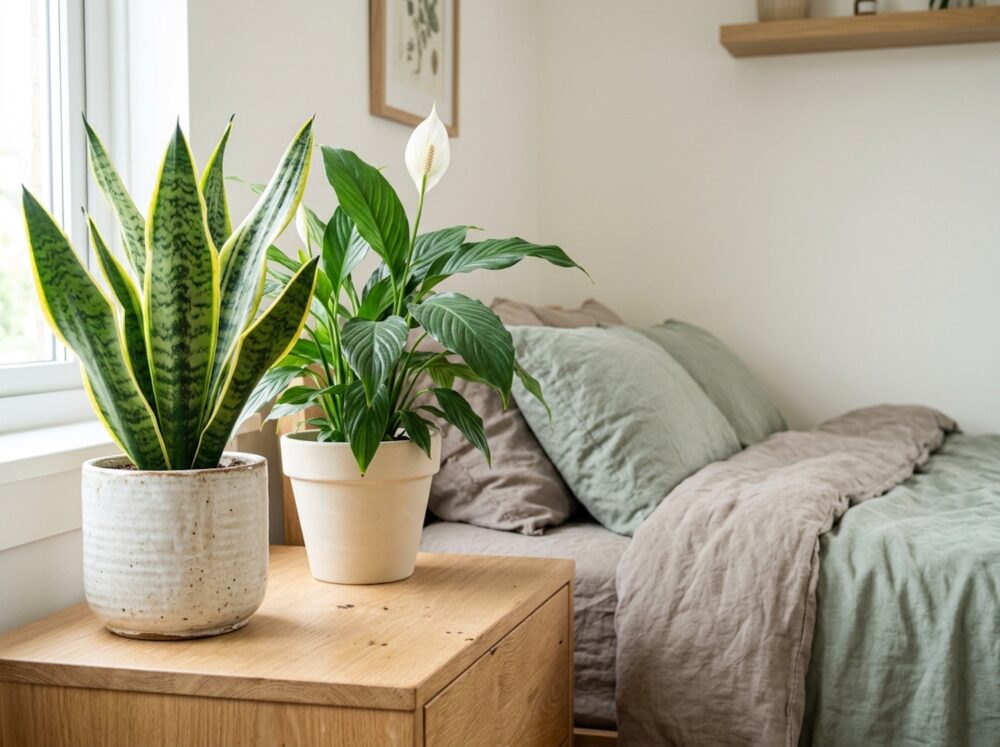
Image credit Bedstar: A detailed close-up shot of a beautifully curated bedside corner in a nature-inspired bedroom. Peace Lilly and potted snake plant in a textured clay pot.
1. Understanding Biophilic Design and Sleep Quality
At its core, biophilic design is the practice of incorporating natural elements into built environments to satisfy the innate human desire to connect with nature. When applied to the bedroom, this design philosophy supports the exact ways our bodies are biologically programmed to rest.
How Nature Elements Align Your Sleep Cycle
Your circadian rhythm—the internal 24-hour clock that regulates sleep and wakefulness—is heavily dictated by light.
Your hypothalamus relies on natural daylight to suppress melatonin production during the morning hours, while boosting serotonin to enhance your mood and focus. In the evening, the absence of light signals the brain that it is time to wind down.
Plants and organic materials also play a vital role. Living plants naturally filter toxins and release oxygen, creating a cleaner, more breathable atmosphere.
Furthermore, the physical materials you sleep on make a massive difference. For instance, resting on a sustainably crafted wooden bed has been shown to reduce heart rate and autonomic arousal, promoting a state of physiological calm.
The Scientific Evidence
The psychological and biological benefits of biophilia are supported by a wealth of academic research:
- Extended Sleep Duration: Studies on the Japanese practice of Shinrin-yoku (forest bathing) reveal that spending mindful time in nature can increase average sleep duration by up to an hour.
- The 15% Sleep Boost: Walking in natural, green environments has been shown to result in a 15% increase in overall sleep time, alongside measurable improvements in deep sleep phases.
- Reduced Stress Biomarkers: According to Stress Reduction Theory, viewing or being near natural elements directly deactivates the sympathetic nervous system (our “fight-or-flight” response), reducing cortisol levels and dropping both systolic and diastolic blood pressure.
2. Essential Nature Decor Elements for Better Sleep
To build an authentic nature-inspired bedroom, focus on these five core pillars:
I. Natural Light and Window Alignment
The direction your bedroom windows face determines the quality of light you receive throughout the day.
- East-facing: Delivers bright morning light, which is ideal for a natural wake-up call.
- West-facing: Captures late afternoon warmth and golden light.
- South-facing: Provides consistent, warming sunlight throughout the day.
- North-facing: Remains cool, offering a steady, diffused light.
Expert Design Tip: Pair delicate, light-filtering sheer curtains with high-quality blackout blinds. This allows you to invite abundant daylight in during the morning while ensuring total darkness at night to maximize melatonin production.
II. Air-Purifying Indoor Plants
While all plants add visual beauty, certain species are exceptionally skilled at upgrading your indoor air quality:
| Plant Variety | Primary Air Quality Benefit | Optimal Placement |
|---|---|---|
| Snake Plant | Emits oxygen at night and naturally regulates humidity levels. | Bedside table or corner of the room. |
| Peace Lily | Filters airborne toxins and suppresses micro-particles. | On a dresser in indirect light. |
| Spider Plant | Highly effective at absorbing odours and carbon monoxide. | Suspended in a hanging planter. |
| Pothos (Devil’s Ivy) | Eliminates volatile organic compounds (VOCs). | Drifting down from a high shelf. |
III. Temperature-Regulating Natural Materials
Synthetic fibres trap moisture and heat, leading to night sweats and broken sleep. Natural materials, however, are highly breathable and naturally regulate your body temperature:
- Wool: Offers incredible water vapour permeability, drawing sweat away from your skin far more efficiently than polyester.
- Linen: Highly breathable and cool, making it the premier choice for summer bedding.
- Goose Down: Traps loft and warmth during the winter without creating a clammy, humid environment.
To get the absolute most out of these premium fabrics, pairing them with a highly breathable, pocket-sprung mattress from Bedstar will ensure proper air circulation and pressure relief for your spine.
IV. Earth-Inspired Colour Palettes
To quiet your nervous system, replace vibrant, high-energy colours with muted, organic tones.
Opt for gentle taupe’s and stone greys as your foundation. Introduce forest green or sage on accent walls or textiles to echo the woodland canopy and round out the space with warm sand or beige to bring a grounded, earthy warmth to the room.
V. Living Textures
Avoid flat, manufactured surfaces. The magic of biophilic design lies in layering varied natural textures. Group rough-hewn timber with smooth slate surfaces, and layer breathable linens against woven rattan, jute, or soft leather.
As natural light shifts across the unique, irregular grain of your wooden furniture, it creates a dynamic, calming atmosphere that synthetic materials simply cannot replicate.
3. Step-by-Step Biophilic Bedroom Blueprint
Ready to transform your bedroom? Follow this structured design process:
Step 1: Optimise Your Light
Clear any bulky furniture away from your windows and hang a mirror directly opposite to bounce natural light deep into the room. For your evening routine, replace cold, bright overhead bulbs with dimmable, warm-toned lights (ideally between 2,700K and 3,000K) to gently prepare your body for rest.
Step 2: Establish a Clutter-Free Foundation
A cluttered environment triggers a low-level stress response, which elevates cortisol and keeps your brain on alert. To maintain a clean, peaceful layout, look for smart storage solutions.
Choosing sleek, gas-lift ottoman beds allows you to use the entire footprint of your bed frame to tuck away seasonal duvets, spare pillows, and winter blankets completely out of sight.

Image credit Bedstar: Bright and airy bedroom interior showcasing a stylish, modern double ottoman bed with a light grey linen upholstered headboard.
Step 3: Style Your Greenery
You do not need an overwhelming jungle to reap the rewards of indoor plants. Aim for a simple rule of three: one tall statement plant (like a Kentia Palm) in a neglected corner, one air-purifying plant on your bedside table, and a trailing plant on a high shelf to introduce vertical rhythm.
Step 4: Create Visual Harmony
Pick one dominant earthy shade as your base, then layer varying tones and saturations across your curtains, bedding, and rugs. If you use a material like rattan in your headboard, try mirroring that texture in your light shades or storage baskets to tie the entire room together seamlessly.
4. Biophilic Pitfalls to Avoid
As you plan your new space, keep these common mistakes in mind:
- Overcrowding with Plants: Too many plants can quickly lead to high humidity, soil odours, and visual clutter. Stick to a few high-performing, well-placed varieties.
- Blocking Natural Light: Avoid using heavy, dark drapes or placing large wardrobes in front of windows. Let the natural light flow as deep into the room as possible.
- Ignoring Proper Ventilation: While plants are excellent air filters, they cannot do all the work. Ensure you regularly open your windows or use trickle vents to encourage healthy air circulation and prevent stale air from building up.
Upgrading your bedroom layout with natural elements is a scientifically proven way to protect your sleep health. By investing in high-quality, organic foundations—like a supportive mattress and a solid timber bed frame—and layering the space with soft, earth-toned colours and purifying plants, you can easily create a bedroom that actively restores your energy night after night.
Final Thoughts